
The 'haar' is rolling over our rooftops here in Edinburgh! That's the fog when cold air hits moist warmer air over the North Sea.
The word makes me think of the German word for hair — also 'haar'. Wisps of fog, like hair? But apparently it's unrelated. According to Wikipedia:
Variants of the term in Scots and northern English include har, hare, harl, harr and hoar. In Yorkshire and Northumberland it is commonly referred to as a sea roke.Its origin is related to Middle Dutch haren, referring to a biting cold wind, or Frisian harig, meaning 'damp'. It has also been suggested to be a borrowing of the Old Norse word hárr, meaning 'hoar, hoary'. It regularly makes landfall in Inverness where the incoming tide brings cold water into the shallow warm Moray Firth and pushes down the Great Glen to Fort William where it shrouds Ben Nevis sometimes for several days.
Baldwin and Sivek have just shown that if it's not a sphere, there's a Turing machine that can check a proof of this fact in polynomial time. And their result relies on the newly proved generalized quasi-Riemann hypothesis!
While writing our paper [BS19], we made the unfortunate decision to treat the number-theoretic input as a black box, taking "GRH" as something mysterious but mostly harmless. This is fairly common practice (many of us use "ZFC" in the same way) but not exactly a sign of understanding on our part—for example, it would have been good to know if partial progress toward GRH might actually make the above theorems unconditional, as explicitly suggested in the introduction to [Kup14]. The purpose of this note is to atone for our sins by seeing what exactly what we might need from GRH to prove these theorems unconditionally.It turns out that it's enough for all these zeros to lie in some strip ε ≤ Re(z) ≤ 1−ε. This is the 'generalized quasi-Riemann hypothesis', which was proved and formalized in Lean on October 12th using an AI system called AxiomProver:
Thanks to Ian Agol for pointing out this new paper.
November 13, 2026
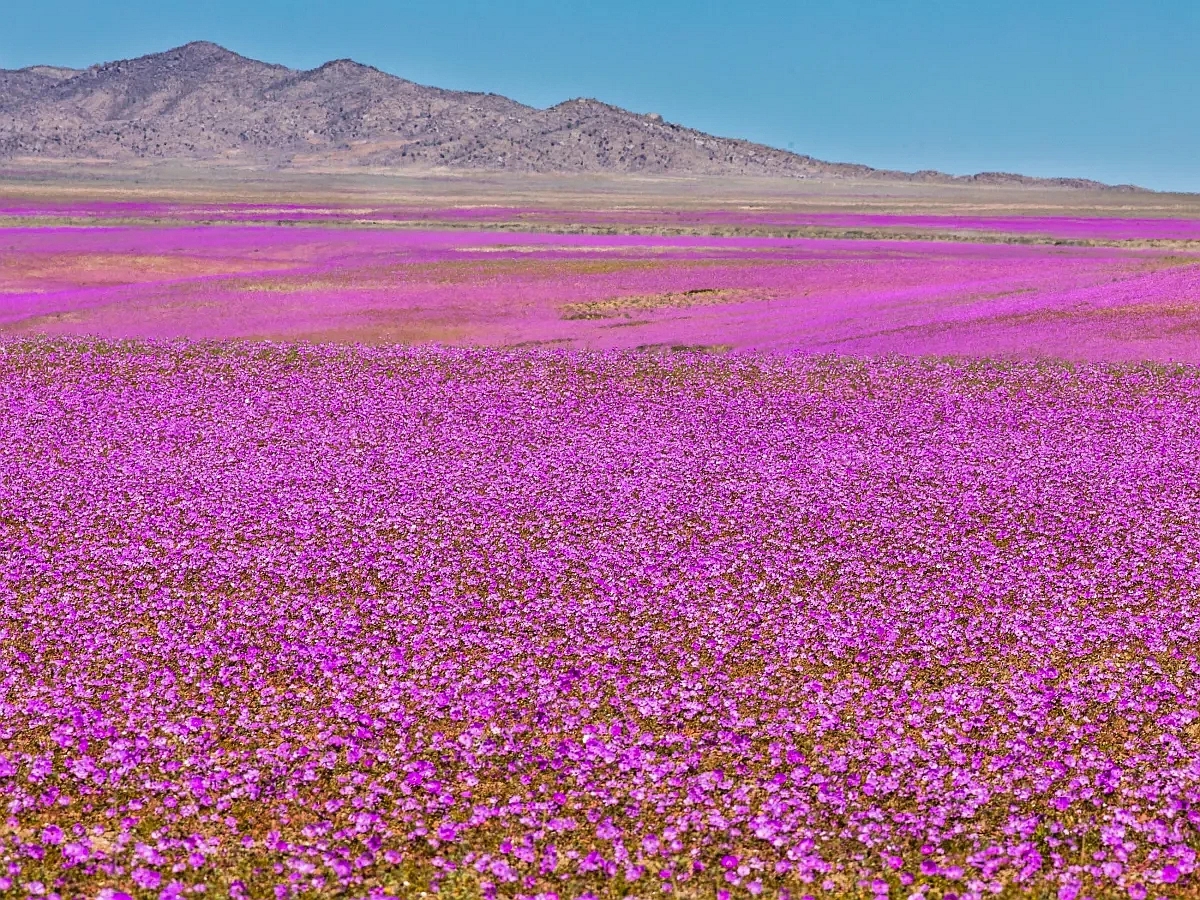
This is the Atacama Desert in northern Chile — the driest desert in the world, except for those in Antarctica. Now it's full of flowers, thanks to record rains in the lower regions this July.
Vallenar, a city in the lower Atacama, averages 32 millimeters of rain a year. This year it got 200 millimeters, about six times as much! Higher elevations got a lot of snow this August. But that's water too.
Credit: Getty Images / Abrien Domundo.
November 1, 2026
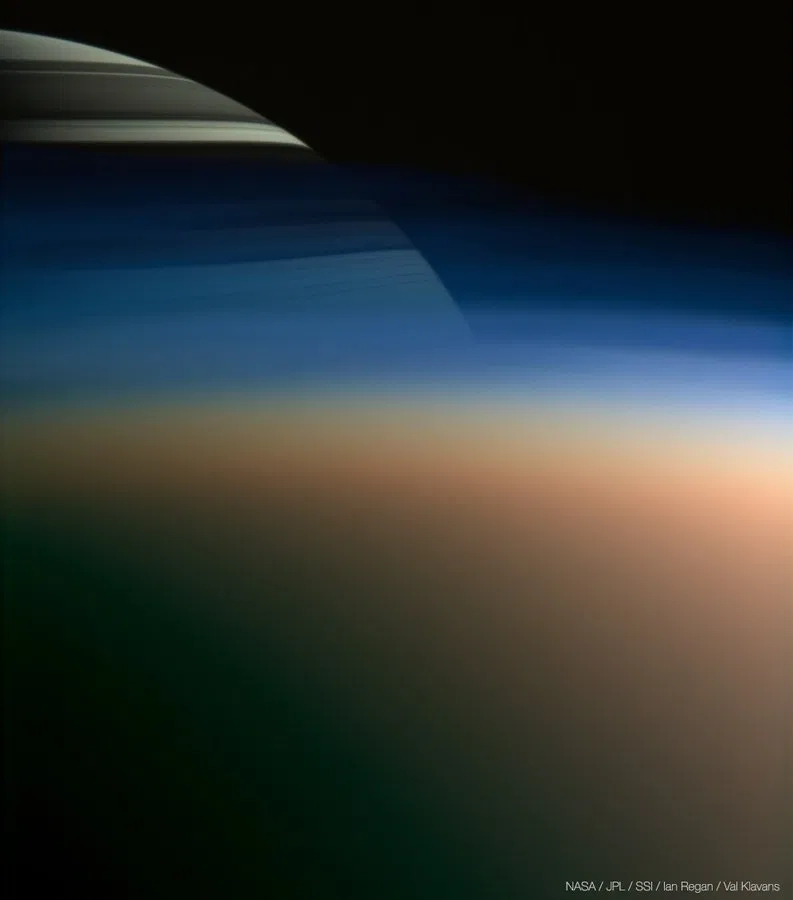
An amazing image. When the Cassini space probe went behind Titan on on March 31, 2005, its view of Saturn became obscured by the brown smog of Titan's atmosphere. This picture is a composite made of images that were taken by the Cassini spacecraft's camera system using red, green, and blue filters. At the time, Cassini was approximately 1,200,000 km away from Saturn and 7,000 km away from Titan.
This image was created by NASA, JPL and SSI and particlarly Ian Regan and Val Klavans.