I wrote 300 issues of a column called This Week's Finds, where I explained math and physics. In the fall of 2022 I gave ten talks based on these columns, and I gave eight more in the fall of 2023.
Here you can find videos of these talks, and some lecture notes.
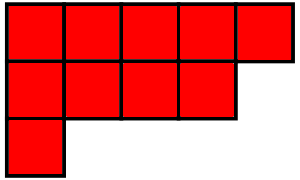
Young diagrams and classical groups
Young diagrams are combinatorial structures that show up in a myriad
of applications. Among other things, they can be used to classify
conjugacy classes in the symmetric groups \(S_n\), irreducible
representations of \(S_n\), and irreducible representations of the
classical groups \(\mathrm{GL}(n)\), \(\mathrm{SL}(n)\), \(\mathrm{U}(n)\)
and \(\mathrm{SU}(n)\).
Dynkin diagrams
Coxeter and Dynkin diagrams classify a wide variety of structures,
most notably finite reflection groups, lattices having such groups as
symmetries, compact simple Lie groups and complex simple Lie
algebras. The simply laced or 'ADE' Dynkin diagrams also classify
finite subgroups of \(\mathrm{SU}(2)\) and quivers with finitely many
indecomposable representations. This tour of Coxeter and Dynkin
diagrams will focus on the connections between these structures.
Quaternions and octonions
There are four normed division algebras: the real numbers, complex
numbers, quaternions and octonions. The quaternions are a noncommutative
algebra of dimension 4, while the octonions are a noncommutative and
nonassociative algebra of dimension 8. Here we explain how
to multiply quaternions and octonions using the familiar dot product
and cross product of vectors. For the proof that octonion multiplication
obeys \(|ab| = |a||b|\), go here:
The threefold way
Irreducible real group representations come in three kinds, a fact
arising from the three associative normed real division algebras: the
real numbers, complex numbers and quaternions. Dyson called this the
threefold way. The spin-1/2 representation of SU(2) is a great example:
it is quaternionic, since SU(2) is isomorphic to the group of quaternions
\(q\) with \(|q| = 1\), and the spin-1/2 representation is isomorphic to
the space of all quaternions. For more, go here:
Combinatorics and categorification
The theory of generating functions is a simple and fun but powerful
tool in enumerative combinatorics, which I will explain in the next
few lectures. Digging into it, we shall see that it rests on some
ideas from 'categorification': the more or less systematic replacement
of sets by categories. One is 'groupoid cardinality': just as finite
sets have cardinalities that are natural numbers, finite groupoids
have cardinalities that are nonnegative rational numbers! Another is
Joyal's theory of species. A species is a type of structure that can
be put on finite sets, of the sort we count in enumerative
combinatorics. Just as polynomials in one variable form the free ring
on one generator, the category of species is the free '2-rig' on one
generator, a 2-rig being a categorified analogue of a rig. I will
explain these ideas with a minimum of prerequisites.
My talks will be very loosely based on this paper:
Categorifying the quantum harmonic oscillator
In my last lecture on combinatorics and categorification, I describe
an application to quantum mechanics. Classically, light in a mirrored
box can be described as a collection of harmonic oscillators, one for
each vibrational mode of the light. Planck 'quantized' the
electromagnetic field by assuming that energy of each oscillator could
only take on discrete, evenly spaced values. Later Einstein took this
seriously, and realized that light comes in discrete energy packets
called 'quanta'. Surprisingly, when we categorify the mathematics
describing this situation we are led to the theory of 'species'
— one of the basic tools of combinatorics. A species is any
type of structure we can put on finite sets. The commutation
relations between annihilation and creation operators, and the inner
product on the Hilbert space of a quantum harmonic oscillator, then
receive a natural interpretation in terms of species.