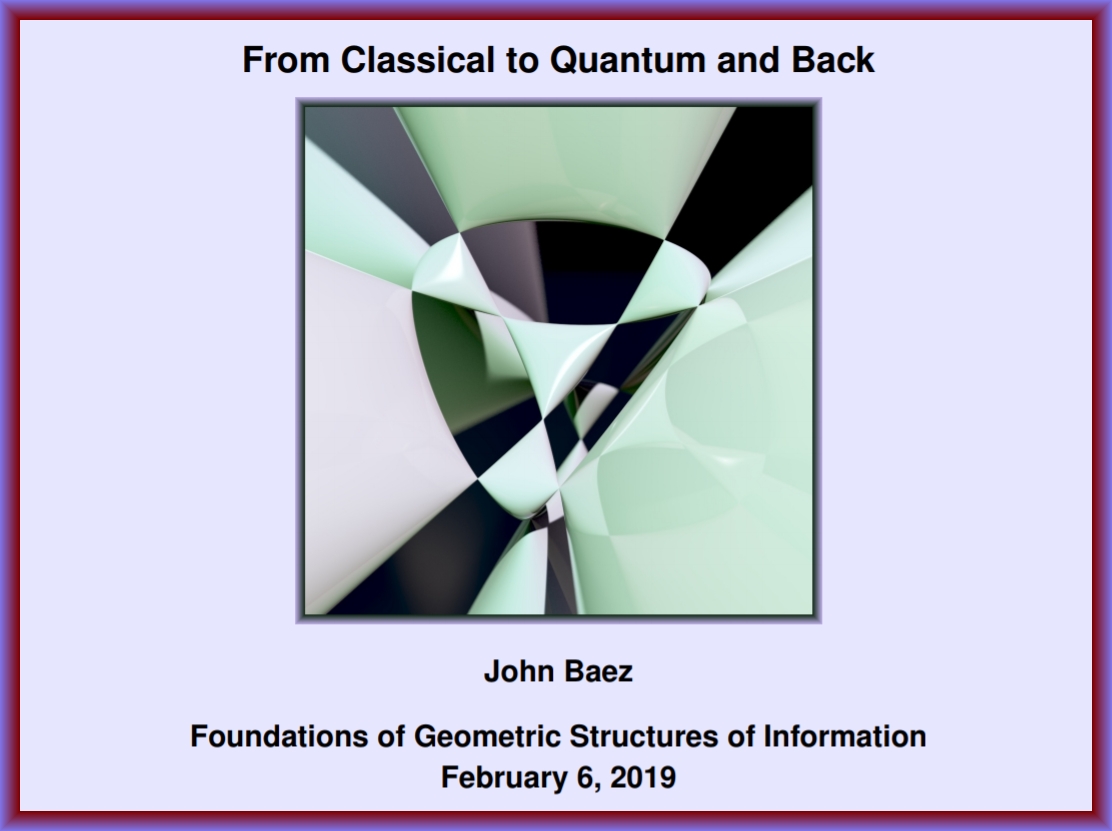
For common questions about physics, you can't beat this:
I don't maintain this Physics FAQ - Don Koks does, so please send any comments about it to him, not me!
If reading my stuff makes you want to ask questions,
take a look at this.
I've started a book on the mathematics of tuning systems, and you can see a draft. If that's too intense, try my talk on this subject.
I'm also turning my old columns into free books. You can get 3 here:
If you think fundamental physics is stuck, read my article on the joy of condensed matter physics.
Can we actually remove carbon dioxide from the air? Yes! Can we remove enough to make a difference? Yes! But what are the best ways, and how much can they accomplish? I explained that in my article in Nautilus, an online science magazine.
Read my pop article on algebraic geometry and geometric quantization: The math that takes Newton into the quantum world. And for more of the technical details, read this.
Check out this interview: A quest for beauty and clear thinking. Also check out my talk on Unsolved mysteries of fundamental physics, which is now available on video.
And while you're at it: take a copy of my diary from 2003 to July 2020!
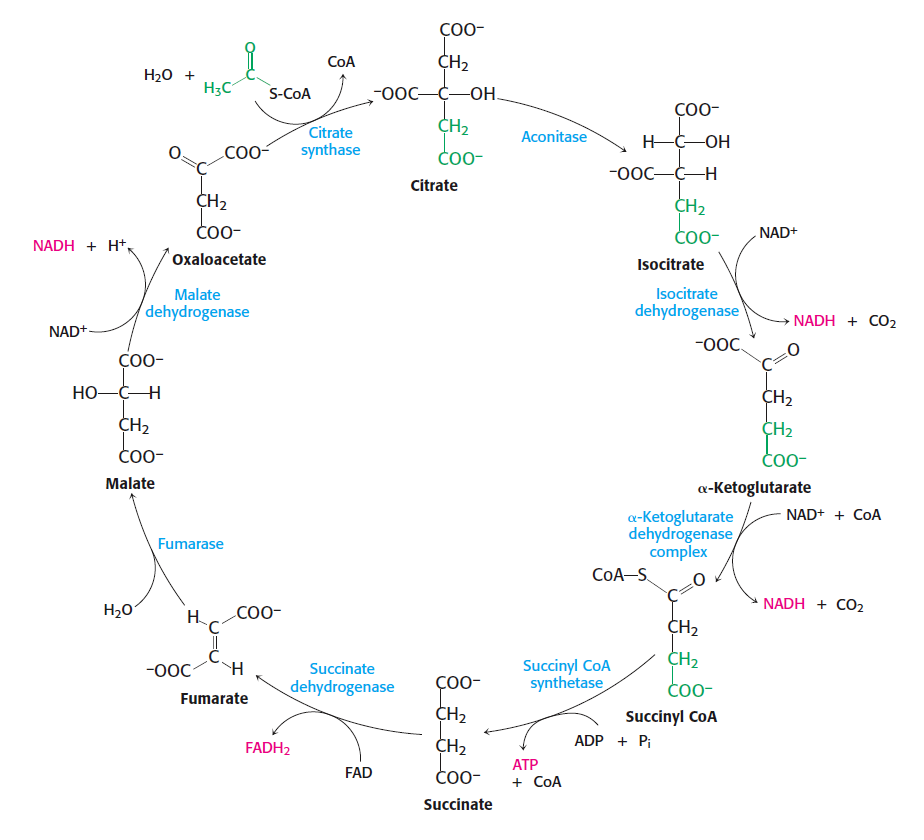
Together with three students at Applied Category Theory 2018, I wrote a paper on biochemical coupling through emergent conservation laws. Try our blog posts about this!
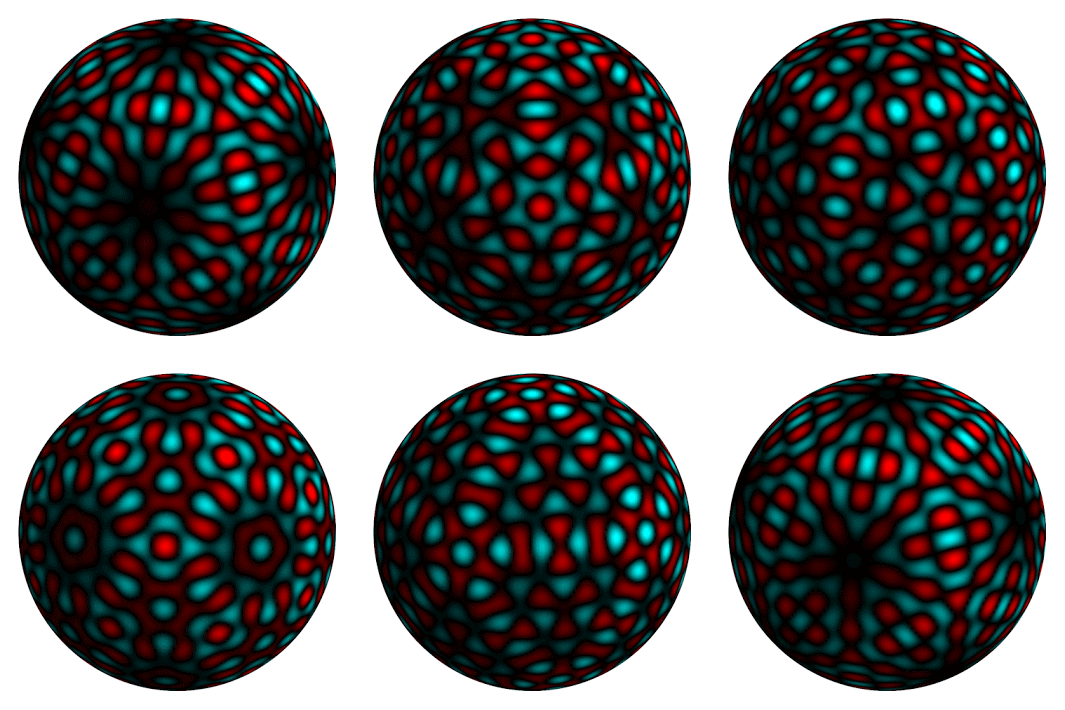
Learn about quantum mechanics and the dodecahedron:
Then read about the glories of the 600-cell (Part 1, Part 2, Part 3), which is a 4-dimensional analogue of the icosahedron:

These posts lead up to a grand conclusion: the Kepler problem and the 600-cell!

And while you're at it, check out my new paper on the icosahedron and E8, and learn about excitonium, Wigner crystals, the universal snake-like continuum, and the connection between braids, entropy and the golden ratio!

Check out my introduction to Kolmogorov complexity and related ideas:
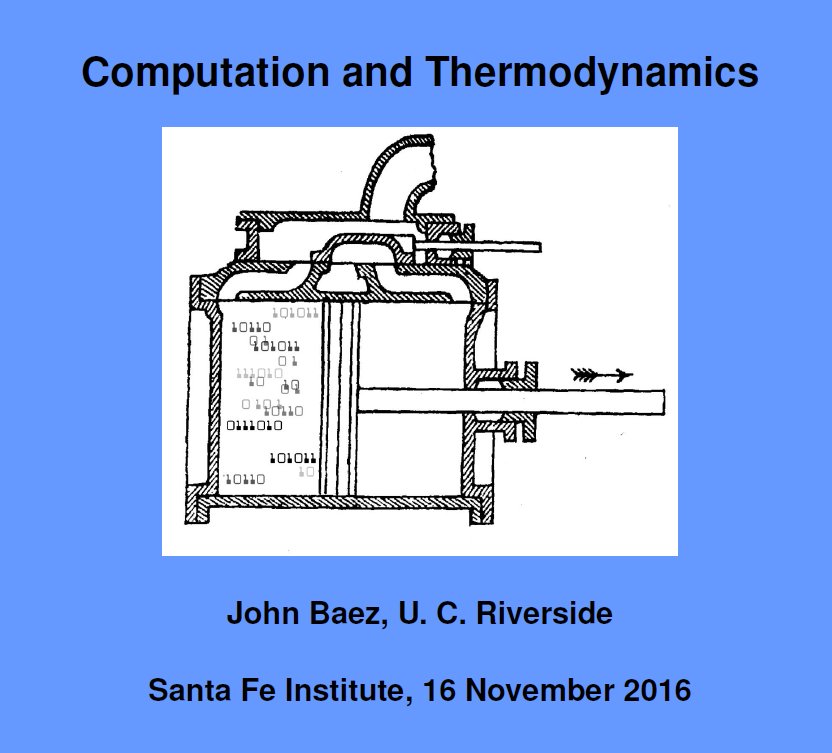
Try my articles on 'struggles with the continuum' — that is, problems with infinities in physics arising from our assumption that spacetime is a continuum:

Read about 'topological crystals':
Take a road trip to infinity:
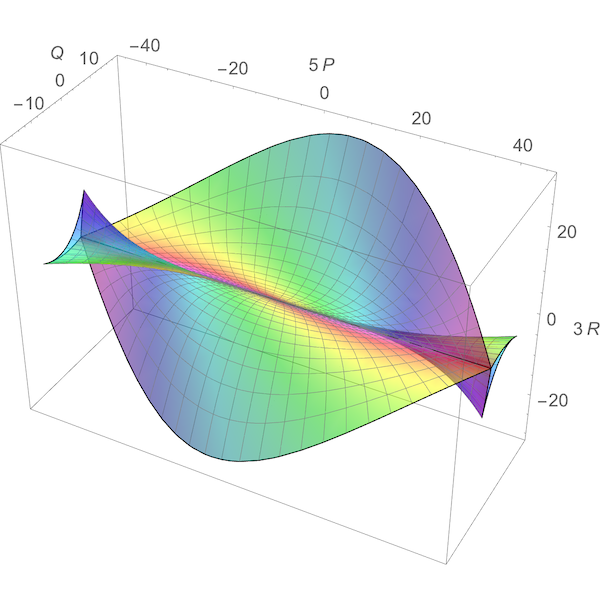
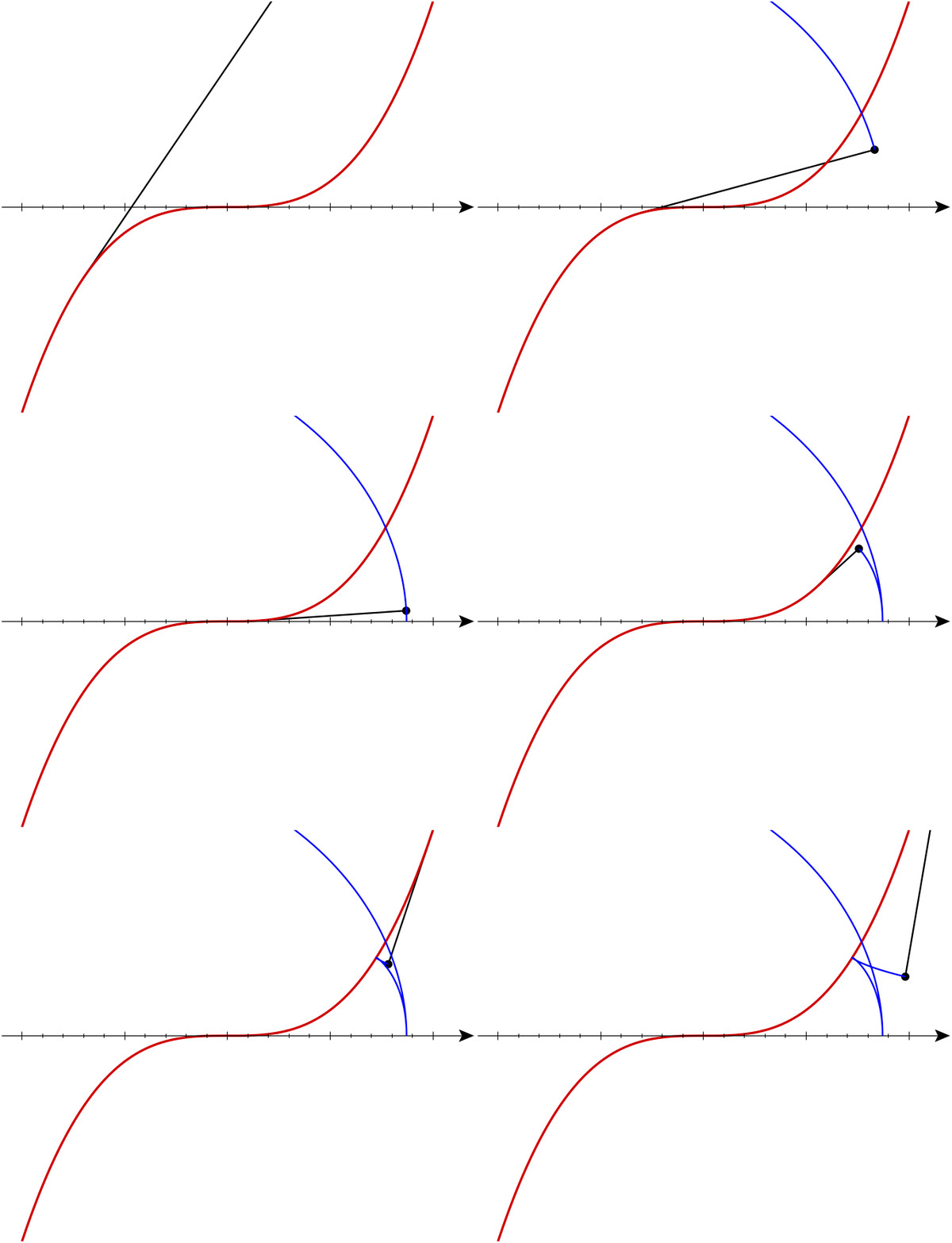
There's a mysterious relation between the discriminant of the icosahedral group:
and the involutes of the cubic parabola:
Learn a bit about quantum gravity, n-categories, crackpots and climate change in my interview on Physics Forums.
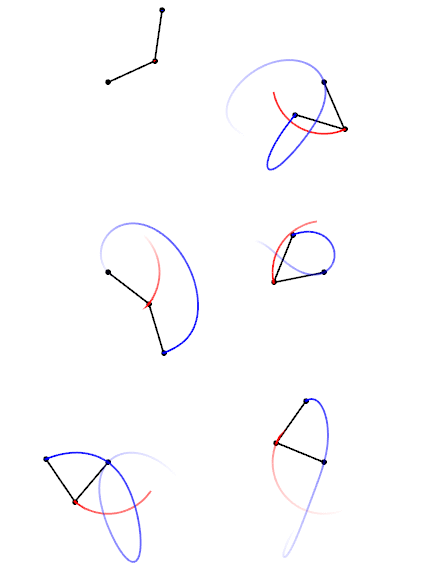
Anita Chowdry and I gave a joint lecture on The Harmonograph at the University of Waterloo. You can watch a video of it!
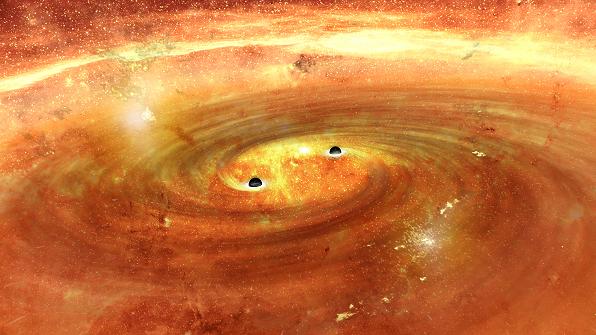
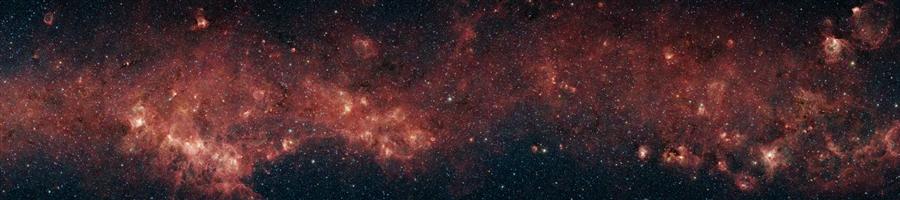
Read the tale of a doomed galaxy:
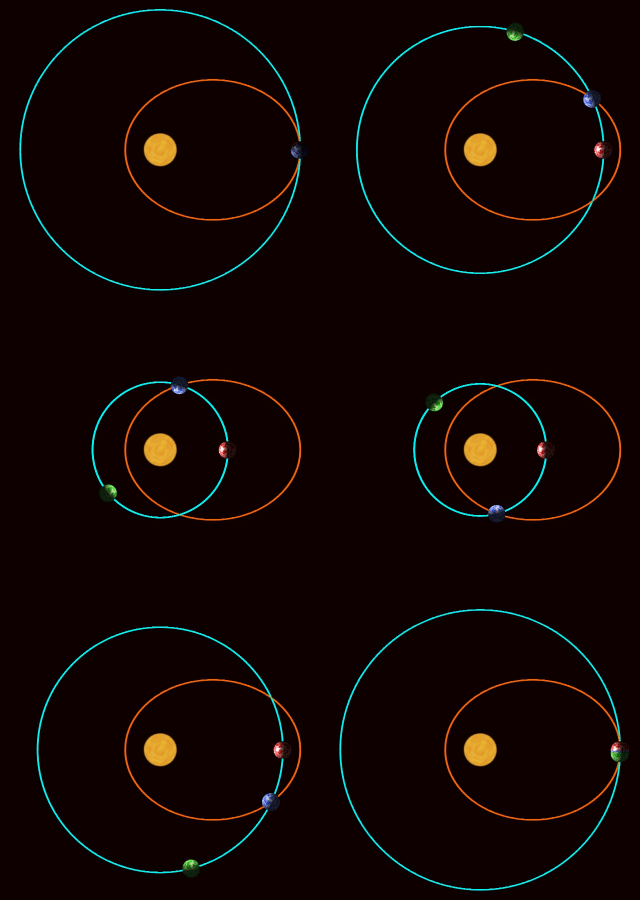
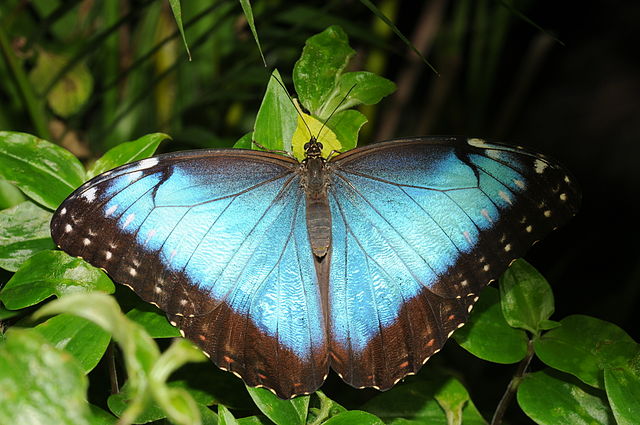
Nature and the world of human technology are full of networks. People like to draw diagrams of networks: flow charts, electrical circuit diagrams, signal-flow graphs, Bayesian networks, Feynman diagrams and the like. Mathematically minded people know that in principle these diagrams fit into a common framework: category theory. But we are still far from a unified theory of networks! Learn more here:
Douglas Adams said the answer to life, the universe and everything is 42. But you may not know why. Now I have found out. The answer is related to Egyptian fractions and Archimedean tilings.
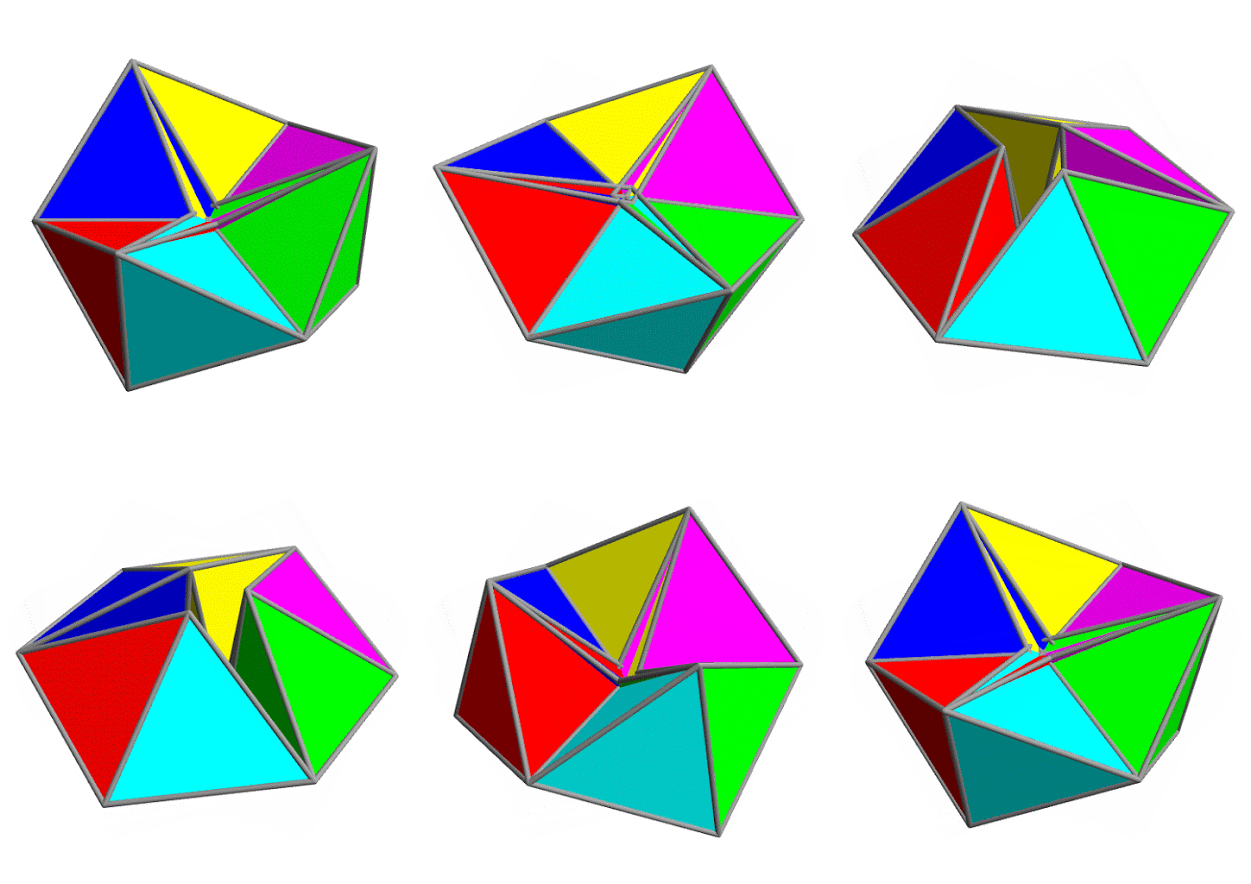
You may enjoy kaleidocycles and collidocycles:
Click the boxes to hear and read about some pieces I made with Greg Egan's QuasiMusic program, which translates quasicrystals into sound:
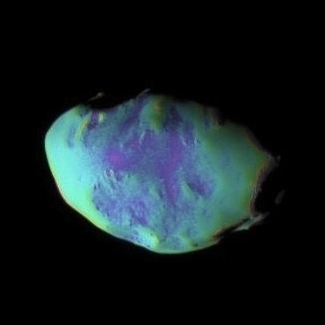

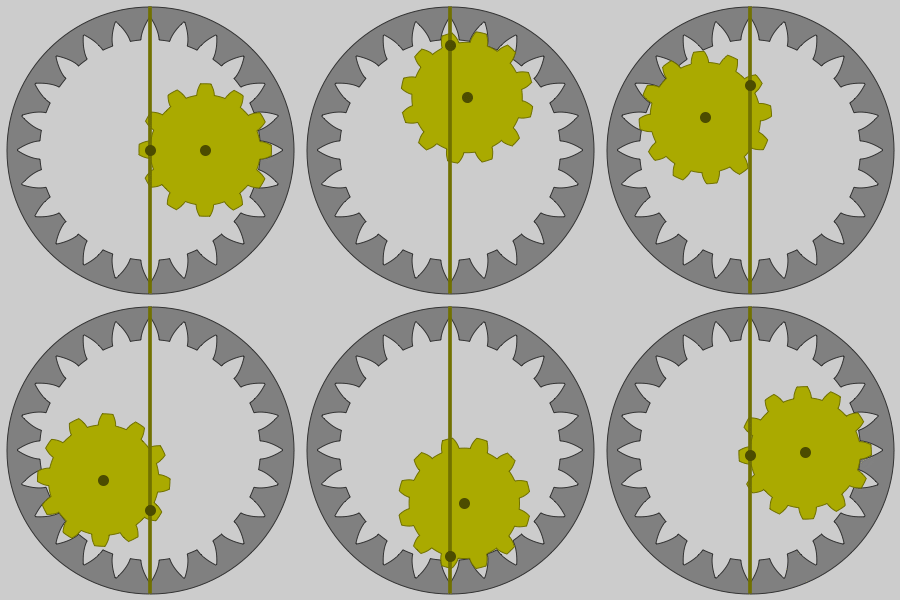
Read my series on the mathematical delights of rolling circles and balls!

There's a math puzzle whose answer is a really huge number. How huge? According to Harvey Friedman, it's incomprehensibly huge. Now Friedman is an expert on enormous infinite numbers and how their existence affects ordinary math. So when he says a finite number is incomprehensibly huge, that's scary. It's like seeing a seasoned tiger hunter running through the jungle with his shotgun, yelling "Help! It's a giant ant!" For more, read this.
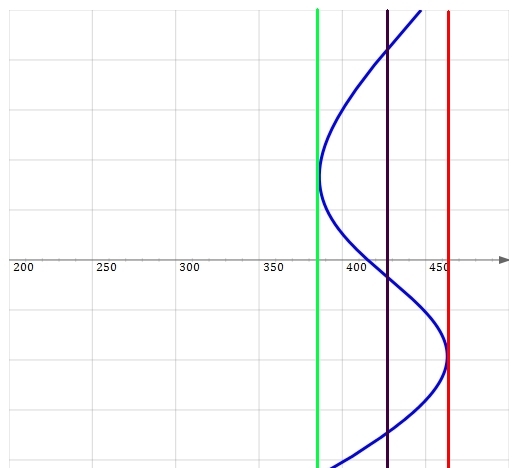
In week319 of This Week's Finds, learn about catastrophe theory in climate physics! This issue features a program you can play with on your browser. It's a simple climate model that illustrates how a small increase in the amount of sunlight hitting the Earth could have a big effects on the climate, by melting snow and revealing darker soil. It was made by Allan Erskine.
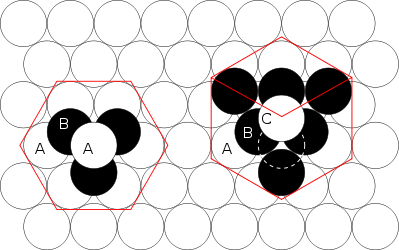
Also on my blog, learn about ice, its many forms and crystal structures, how it resembles diamonds, and what scientists do with a machine that uses 80 times the world's electrical power for the few nanoseconds it's running.

© 2025 John Baez
baez@math.removethis.ucr.andthis.edu